Can Hot Pot Cause Carbon Monoxide Poisoning? Watch Out for These Misconceptions
More and more people opt for a steaming hot pot during holidays.
Yet few would imagine that dining on hot pot has led to suspected carbon monoxide poisoning incidents, with multiple victims rushed away by ambulances.
Real-World Case
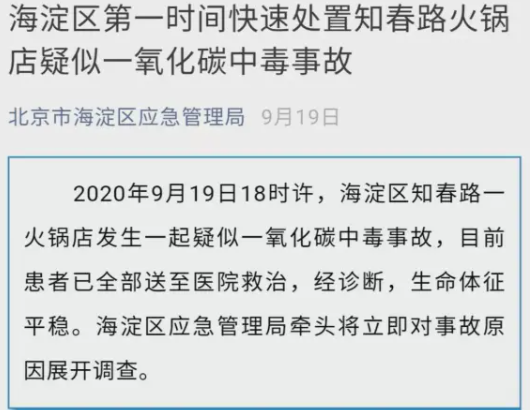
Several diners at a hot pot restaurant suffered suspected carbon monoxide poisoning. Multiple ambulances and police cars lined up outside the restaurant, drawing a large crowd of onlookers. On the same day, the Haidian District Emergency Management Bureau of Beijing released an official statement and launched an investigation into the cause of the accident.
Similar incidents have occurred repeatedly in recent years. To shed light on the hazard, researchers conducted a dedicated experiment using charcoal as hot pot fuel to measure indoor carbon monoxide levels and their risks under different ventilation conditions.
Experiment Results
Room 1: Doors and windows kept open for continuous ventilation. Two white mice in a cage inside the room remained energetic and active throughout the test.
Room 2: Doors and windows closed, but exhaust fan turned on. The two mice also hopped around actively in the cage.
Room 3: All doors, windows and exhaust fan shut off. After roughly 5 minutes, the once lively mice began to slow down: one crept into a corner and barely moved, while the other moved sluggishly.
Ten minutes later, technicians used a professional carbon monoxide detector to take readings:
Room 1: Carbon monoxide concentration hit 20 ppm, within the safe threshold.
Room 2: Carbon monoxide concentration reached 42 ppm; the two mice remained lively.
Room 3: Carbon monoxide concentration climbed to 136 ppm, far exceeding the levels in the other two rooms.
Carbon monoxide is an intermediate byproduct produced during the combustion of carbon-containing fuels, including coal, firewood, pipeline gas, solid alcohol, gasoline, diesel and kerosene. As we all know, combustion relies on oxygen. Poor ventilation lowers oxygen levels, resulting in incomplete combustion and surging carbon monoxide output. Once carbon monoxide accumulates to a certain concentration in an enclosed space, it can trigger poisoning in humans.
According to research data:
Exposure to carbon monoxide at a concentration of 220 mg/m³ for one hour causes poisoning;
Exposure to 1800 mg/m³ for one hour can be fatal;
At a concentration of 14,080 mg/m³, instantaneous death can occur within just one minute.
Carbon monoxide poisoning peaks in autumn and winter, making effective prevention critical. However, the following folk remedies are completely ineffective and unreliable:
Common Misconceptions
Misconception 1: Cold air will wake poisoned victims
A grandfather and his grandson suffered carbon monoxide poisoning at the same time. Villagers carried the barely breathing pair outside without any warmth protection, and both died one after another. Cold exposure worsens oxygen deprivation, disrupts peripheral blood circulation, and may trigger shock and death. Cold air cannot revive carbon monoxide poisoning patients.
Misconception 2: No coal stench means no poisoning
Low-quality coal releases a foul odor when burned, which can trigger headaches and dizziness. Carbon monoxide itself, however, is colorless and odorless, generated by incomplete carbon combustion. It is a dangerous misunderstanding to assume no coal stench equals no carbon monoxide risk.
Misconception 3: A basin of water beside the stove prevents poisoning
Carbon monoxide is insoluble in water. Reliable prevention requires leaving doors and windows partially ajar, installing ventilation hoods, and keeping flues unobstructed. A basin of water placed next to a stove cannot absorb escaping carbon monoxide gas.
Rather than relying on subjective judgment and outdated folk experience to detect excessive carbon monoxide, we strongly recommend installing a household carbon monoxide alarm. Equipped with an electrochemical
carbon monoxide sensor, the device detects CO in the air via electrochemical reactions, delivering excellent selectivity and stable performance.
Friendly Reminder
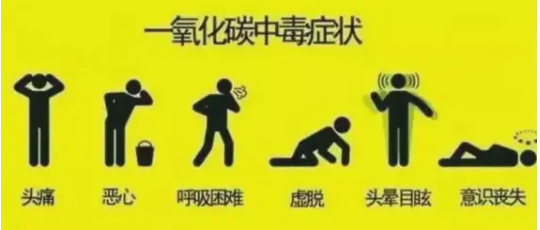
Scenarios in daily life with carbon monoxide poisoning risks:
Rooms heated or cooked with coal stoves without proper flues;
Poorly ventilated air-conditioned rooms or basements where charcoal or solid alcohol is used for hot pot or barbecues;
Rooms with improperly installed, misused or leaking gas water heaters and gas stoves;
Vehicles with all windows closed while the air conditioner runs for hours, or parked cars with engines left idling.
Translation Notes
Fixed missing words in the original Chinese text (e.g., 通风 ** → poor ventilation; ** 范围 → safe threshold) based on context for logical English expression;
Maintained formal safety-promotion tone suitable for public hazard publicity;
Standardized technical terms: carbon monoxide (CO), ppm, electrochemical sensor, peripheral circulation, flue etc.;
Retained the structured layout of cases, experiments, misconceptions and reminders consistent with the original text.